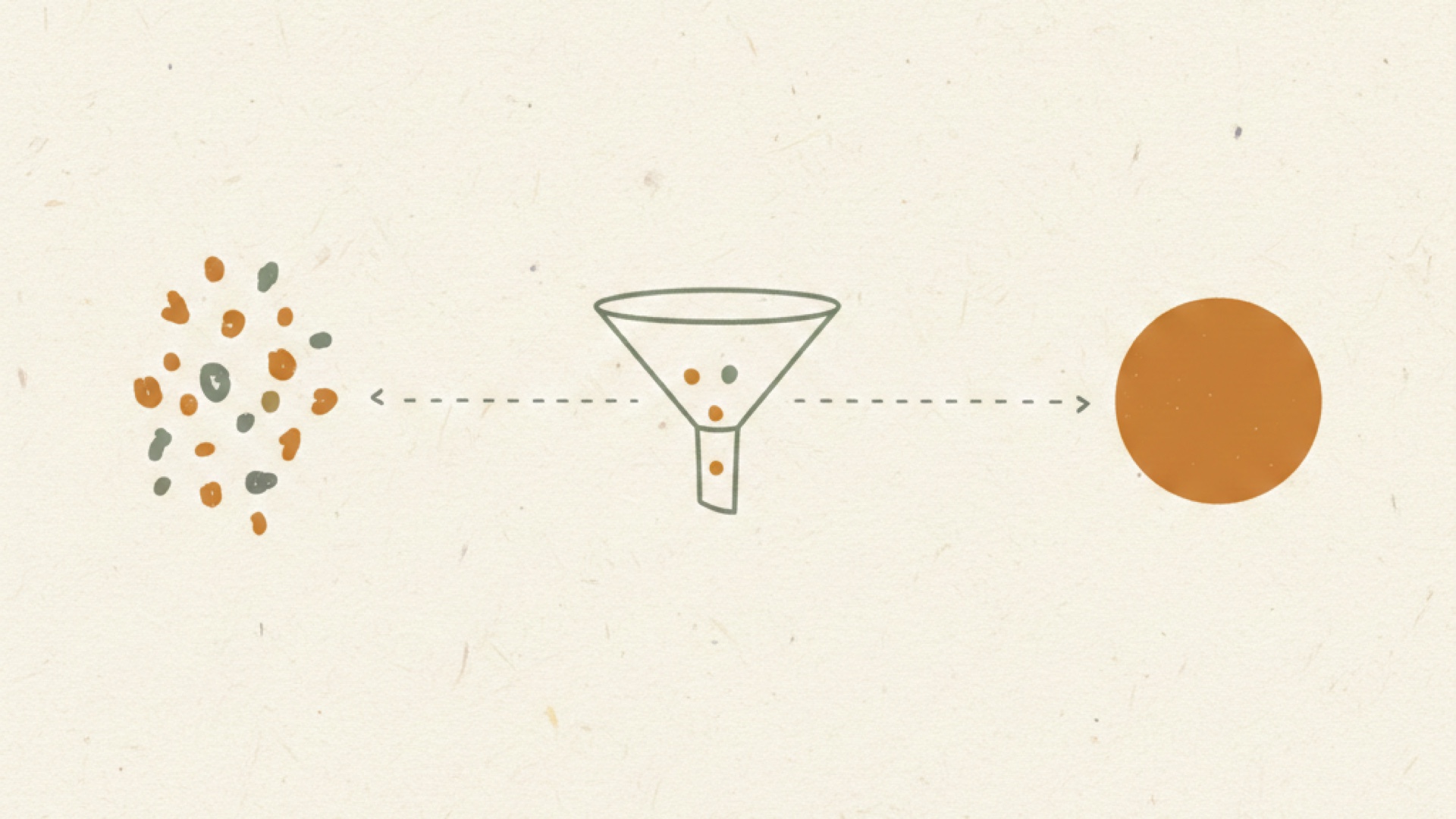
The problem: Most companies start innovation programmes with genuine ambition. They launch internal idea submission platforms. They run innovation campaigns. They celebrate wins. But when the board asks, "What is the return on investment?" they freeze. No one has the numbers. No one tracked the right metrics from day one. Sound familiar? This 2026 guide shows you how to measure real innovation ROI, benchmark against public case studies like Halfords, and prove value to leadership, with a worked example, hard and soft metrics tables, a measurement-from-day-one playbook, a tools-and-features checklist and an FAQ.
Why most innovation programmes cannot prove their value in 2026
I have spoken with dozens of innovation leaders, and this pattern repeats. The programme starts enthusiastically. Employees submit ideas. There is energy and hope. Then, six months later, someone asks for proof. Did it work? What was the return? And silence falls over the room.
The reason is not that innovation does not create value. It does. The problem is that most programmes were not designed with measurement in mind. There were no baselines. No tracking mechanisms. No defined metrics before launch. By the time leadership wants numbers, the data is scattered, anecdotal, or missing entirely.
Innovation ROI is different from other business investments. You cannot measure a training programme the same way you measure a software licence. Innovation creates both direct value (cost savings, new revenue) and indirect value (employee engagement, culture change, faster decision-making). Both matter. Both require different measurement approaches.
The good news: it is fixable. With a clear framework and the right tools, you can measure innovation ROI accurately and report it with confidence.
Customer proof: how Halfords measures innovation ROI at scale in 2026
The clearest 2026 benchmark for "can you actually prove innovation ROI" is Halfords, the UK retail and automotive services group. They rolled Hives.co out across 1,000+ engaged colleagues spanning 400 stores. In the first six months, their programme implemented 515 ideas delivering £759,000 in realised business value, roughly £1,470 per implemented idea. Every number in that sentence is a metric the innovation team can defend in front of the CFO: submissions, implementation rate, realised value per idea, coverage across locations.
The reason it works: Halfords designed measurement into the programme from day one. Each implemented idea is tagged with department, value category, and a finance-verified impact number. Store-level rankings of ideas submitted and implemented are published internally, so participation becomes visible and measurable rather than abstract.
VINCI Energies, a major European energy services group with 90,000 employees across 2,200 business units in 55 countries, runs a multi-entity deployment. Each business unit tracks its own implementation rate and cost savings while rolling up to a shared group-level scorecard, the standard 2026 pattern for decentralised service groups and manufacturers. Browse the full list on our customer stories page.
The takeaway: mature 2026 innovation programmes do not guess at ROI, they measure it on the same cadence and rigour as any other operating investment.
What counts as "ROI" in innovation? Direct vs indirect value
Before you build a measurement system, you need to agree on what counts as ROI. This is where many programmes go wrong. They conflate "value" with measurable "ROI," and those are not the same thing.
Direct ROI is tangible, financial, and time-bound:
- Cost savings from process improvements
- Revenue from new products or features
- Time saved from efficiency gains (quantified in hours or labour cost)
- Error reduction that prevented costly mistakes
- Customer retention improvements tied to innovation
Indirect ROI is real but harder to quantify:
- Employee engagement and morale improvements
- Faster decision-making and reduced bureaucracy
- Improved employer brand and recruitment
- Culture shift towards experimentation
- Competitive positioning and market agility
Be honest about what you are measuring. If the primary value is cultural (employees feel heard, decision-making improves), say that. Do not fabricate cost savings numbers. Conversely, if you do see financial returns, document them rigorously. Both types of value matter. Both should be reported separately.
The innovation ROI formula: a practical 2026 calculation
The basic structure is simple, but the details matter.
Innovation ROI = (Total Value Generated − Programme Costs) / Programme Costs × 100
Where Total Value Generated = direct financial gains + indirect value (quantified); Programme Costs = software, labour, time, external consulting, training; Time Period = usually annual, but can be quarterly for fast-moving programmes.
Example: mid-sized European manufacturer (500 employees)
Programme costs (annual):
- Idea management software (Hives.co Pro, €1,495/month): €17,940
- Dedicated innovation manager (50% time): €45,000
- Training and launch: €8,000
- Total: €70,940
Value generated (first year):
- Cost reduction from 3 process improvements: €110,000 (verified by operations)
- Efficiency gains from 5 ideas (time saved at €55/hour): €41,000
- Revenue from 1 new service line: €180,000 (net first-year margin)
- Subtotal direct value: €331,000
Indirect value (conservative):
- Reduced turnover from improved engagement: 2 fewer departures saved €75,000 in hiring/training
- Faster decision-making (50 hours saved in meetings/approvals): €2,750
- Subtotal indirect value: €77,750
Total value: €408,750
ROI calculation: (€408,750 − €70,940) / €70,940 × 100 = 476% ROI. For every euro invested, the company generated roughly €5.76 in return.
This is not a fantasy number. Halfords cleared a comparable benchmark inside six months on a Pro/Enterprise footprint. The key is that every number should be documented, defensible, and verified by the relevant department head.
For more guidance on tracking and reporting, see our one-page innovation report template.
Hard metrics: direct financial gains and time savings
Hard metrics are the backbone of any ROI calculation. They are specific, quantifiable, and often tied to department budgets or P&L statements.
| Metric | How to measure | Typical annual range | Documentation |
|---|---|---|---|
| Cost reduction / process improvement | Before/after analysis of department budget or line-item costs | €50K–€500K+ per idea | Finance sign-off, pre/post cost data |
| Time savings | Hours saved per week × hourly labour cost × 52 weeks | €10K–€200K per idea | Manager certification, timesheet data |
| Revenue from new products/services | Net margin in first 12 months | €100K–€1M+ | Sales/product quarterly reports |
| Error reduction / waste prevention | Reduction in defects × cost per error or rework | €20K–€300K | Quality/operations data |
| Customer retention / churn reduction | Customers retained × lifetime value | €100K–€500K | Customer success analysis tied to specific improvements |
The critical rule for hard metrics: verify with department heads. A finance manager, operations director, or sales VP should sign off. This protects you and builds credibility with the board. Halfords routes every implemented idea through a local finance or operations sign-off before the £-value counts toward the programme total.
Soft metrics: engagement, culture, and retention
Soft metrics matter even though they are harder to quantify. They often tell a more complete story.
| Metric | How to measure | Why it matters | Monetisation (optional) |
|---|---|---|---|
| Employee engagement | Pre/post survey on "I feel heard," "My ideas matter," "I have influence" | Engaged employees are more productive and loyal | 10-point engagement gain ≈ 2–5% productivity gain = €X in labour value |
| Participation rate | % of workforce submitting or voting | High participation signals cultural buy-in | Indirect: stronger culture, better retention |
| Turnover / retention | Departure rate before vs after launch | Reduced turnover saves hiring/training cost | Each prevented departure saves €45K–€140K depending on role |
| Decision-making speed | Average time from idea approval to implementation | Faster decisions = faster market response | Hours saved in meetings/approvals × hourly rate |
| Cross-functional collaboration | Ideas involving multiple departments; collaboration survey scores | Breaks down silos | Indirect: fewer redundant projects |
A word of caution on soft metrics: they are real, but do not overstate them. An engagement score improvement is valuable. But if you claim it is worth €500K in productivity gains without backing data, you lose credibility.
How to set up measurement from day one
The biggest 2026 mistake is launching a programme without measurement infrastructure. By the time you want to report ROI, six months have passed and the baseline is unclear.
Step 1: Establish your baseline
Document the current state before launch: employee engagement scores (especially "feeling heard" and "influence"), turnover rate and cost per departure, time spent in approvals and decision-making meetings, process costs in high-improvement areas, and defect or rework rates. These numbers become your comparison point. Without them, you cannot credibly claim impact.
Step 2: Define what success looks like
Before launch, decide on three to five key metrics. Examples: participation rate (target 40% of workforce submitting or voting); cost savings from implemented ideas (target €100K–€200K in year one); employee engagement improvement (target +10 points on a 100-point scale); time-to-decision reduction (target 30%); retention improvement (target 2–3% reduction in voluntary turnover). Share them with leadership. They become your accountability metrics.
Step 3: Build tracking into your workflow
Choose a tool that makes measurement automatic. When ideas are submitted, the system should capture submission date and submitter department, category (cost reduction, new revenue, efficiency, culture), status as it moves through approval, and implementation date and verified impact. Hives.co's analytics does this automatically with category tags and currency-value fields tied to each idea.
Step 4: Create a review cadence
Monthly or quarterly, review metrics: how many ideas implemented vs submitted, average time from submission to decision, which departments are participating, verified financial impact so far. These reviews keep the programme honest and flag problems early. See how to prioritise ideas when everything feels important for the scoring frameworks to plug in here.
Reporting to leadership: making the numbers clear
C-suite executives want the answer to one question: did the innovation programme create value, and how much?
The best approach is a simple one-page report:
- Top line: "Innovation programme generated €408K in value against €71K investment (476% ROI)"
- Breakdown: Cost savings (€X), new revenue (€X), time savings (€X), retention gains (€X)
- Participation: "45% of workforce engaged; 28 ideas implemented"
- Stories: 2–3 concrete examples of ideas that worked
- Outlook: "Year 2 projection: €600K+ value as programme matures"
Keep it factual, clear, and humble. If your numbers are this strong, you do not need hyperbole. We have built a free one-page report template you can customise. For the broader set of programme templates (scorecards, communication plans, evaluation sheets), download the Idea Program Toolkit.
Common pitfalls in measuring innovation ROI
Pitfall 1: Counting ideas as value
"We received 200 ideas, so the programme worked." No. Ideas are not value. Implemented ideas with verified results are value. Track both metrics separately so the distinction is clear.
Pitfall 2: Double-counting value
Be careful not to count the same benefit twice. If an efficiency improvement saves 100 hours of labour per month, do not also count it as "time saved for strategic work." Pick one.
Pitfall 3: Claiming causation without evidence
Did retention improve because of the innovation programme or because the economy is strong? You cannot always know. Use conservative estimates. Say "estimated X% attributable to improved engagement from the innovation programme" rather than claiming 100% causation.
Pitfall 4: Ignoring "innovation theatre" signals
Some programmes generate lots of ideas but few implementations. This signals slow approval, lack of resources, unclear decision criteria, or leaders who are not genuinely committed. Fix it before you measure ROI. See our guide on recognising innovation theatre.
Pitfall 5: Only measuring short-term gains
Some ideas take 18 to 24 months to implement and show ROI. If you measure at month 12, you will miss them. Have both a short-term and long-term horizon. Report quarterly progress, but reserve final judgement until you have a full year of data.
Tools that make measurement easier
Manual measurement is possible, but it is time-consuming and error-prone. The right tool removes the friction and ensures consistency.
When you evaluate idea management software, ask:
- Custom metadata fields. Can you tag ideas with category, estimated value, owning department and status?
- Analytics dashboards. Can you see participation rate, implementation rate and value breakdown in real time?
- Report exports. Can you export the data for board reports and finance reconciliation?
- HR / finance integrations. Can the tool pull actual cost data, or connect to validated business metrics rather than self-reported estimates?
- Audit trail. Can finance verify the chain from submission to verified impact for any individual idea?
Hives.co has these measurement and reporting features built in. The platform tracks every idea from submission to implementation with clear data on impact and ROI. It also integrates with common HR and finance tools, so you can rely on real department data rather than estimates.
What does idea management software cost in 2026 (and how does that feed ROI)?
The denominator in any ROI calculation is programme cost, and software is usually the biggest line item. Our full 2026 pricing guide breaks down all 12 major vendors, but the short version:
- Flat-rate platforms: Hives.co starts at €695/month for Core, €1,495/month for Pro, and €1,995/month for Enterprise. Everyone in the workforce can participate without a per-user tax, which keeps the ROI denominator predictable. See the full pricing breakdown.
- Per-user platforms: Some plans scale with headcount, which pushes the denominator up fast once you involve the whole frontline.
- Enterprise suites: HYPE Innovation, Brightidea, Qmarkets, and ITONICS typically land at €40,000 to €150,000+/year, which is a much higher bar for ROI. See our HYPE Innovation alternative, Qmarkets alternative, and Ideanote alternative guides for budget-matched comparisons.
When you are evaluating tools, our 10 best idea management software tools (2026) and buyer's guide cover feature comparisons, and the CI software guide for manufacturing covers industry-specific measurement features.
Take action this week: a five-step measurement starter
If you want to put this into practice without a six-month design phase, here is a five-step starter you can run inside one week:
- Capture your baseline. Pull the current numbers for engagement scores, voluntary turnover, average decision time on improvement requests, and process costs in two or three high-improvement areas. A single shared spreadsheet is enough.
- Pick three to five metrics. Write them down. Share them with leadership and your innovation sponsor. They are now your accountability metrics, not aspirations.
- Stand up the tracking. If you already have a platform, configure category tags and a currency-value field on every idea. If you do not, set up a Google Form or Notion database with the same five fields (category, estimated value, owning department, status, impact verified).
- Schedule the review cadence. Monthly 30-minute reviews with the innovation team, quarterly 60-minute reviews with leadership, an annual full report. Put them in the calendar now, before the programme launches.
- Plan the first report. Even a placeholder report with the structure, sections and target metrics fills in over the first quarter. Knowing how the report will look forces clarity on what you are tracking.
None of this requires a perfect platform on day one. It requires the discipline to write the metrics down, share them, and review them on a fixed cadence.
Frequently asked questions about innovation ROI
How do you calculate the ROI of an innovation programme?
ROI = (Total Value Generated − Programme Costs) / Programme Costs × 100. Total Value Generated includes direct financial gains (cost savings, new revenue, time savings) plus quantified indirect value (retention gains, faster decisions). Programme Costs include software, labour, training, and external consulting. Document and verify every number with the relevant department head before reporting. Halfords' 2026 case study of £759,000 realised value in six months on a Hives.co deployment is a good public benchmark.
How long should you measure before reporting innovation ROI?
A 12-month initial assessment is the standard benchmark. Quick wins show up in 3 to 6 months, but cultural impact and process improvements take longer. Report at quarter milestones (0–3, 3–6, 6–12) so progress is visible, with full-year reporting giving the most credible picture.
What if your innovation programme does not show financial ROI in year one?
This is normal, especially if the focus is cultural change or long-term R&D. Report soft metrics (participation rates, engagement, decision speed) plus projected value of ideas in the pipeline. Example: "15 ideas in implementation with estimated combined value of €450K by year two." Manage expectations early and you will not face a credibility crisis later.
What is a good innovation ROI benchmark?
Mature 2026 programmes typically land between 3x and 10x return on programme cost within 12 months. Halfords' first six months delivered £759K of verified value on a Pro/Enterprise-tier deployment, well above the 3x benchmark. A well-run mid-market programme on a €70K–€100K annual cost base should target €250K–€800K of verified value in year one.
Should you measure innovation ROI by idea, by department, or company-wide?
All three. Track individual ideas so you know which work. Track by department so you can see where innovation happens best. Track company-wide for board reporting. Different stakeholders need different views of the same data.
How do you handle ideas that fail or get parked?
Do not hide them. If you submitted 100 ideas and only 20 reached implementation, say so. The 80 that did not are not a programme failure if the process was fair and transparent. That is innate to innovation: most ideas do not work. What matters is the ROI of the ones that do.
Can innovation ROI be tied to executive bonuses?
Carefully. Direct bonus ties risk gaming, where leaders inflate numbers or avoid transparent measurement. Instead, tie 10 to 20% of bonus to innovation progress, with actual results measured six months after fiscal year-end. This creates accountability without perverse incentives.
Should ROI include the cost of internal time spent reviewing ideas?
Yes. The most common reason ROI numbers fall apart in finance review is omitting internal labour cost. Estimate fully-loaded hours per week per reviewer, multiply by hourly cost, and roll it into the programme cost denominator. Excluding it inflates ROI by 20-40% on most mid-market programmes.
Next steps
If you want a 2026 innovation programme you can actually measure:
- See the full Hives.co pricing breakdown (flat-rate tiers so the ROI denominator stays predictable)
- Book a 20-minute demo to see the analytics dashboard and a Halfords-style measurement flow live
- Explore the Hives.co analytics and measurement features
- Read the 2026 business-case guide for the internal proposal template
Related guides
- What is idea management? Complete guide (2026)
- Employee-driven continuous improvement (2026)
- Continuous improvement software for manufacturing (2026)
- Idea management software pricing comparison (2026)
- 10 best idea management software tools (2026)
- Idea management software buyer's guide (2026)
- How to prioritise ideas when everything feels important
- How to get executive buy-in for idea management
- Employee engagement through innovation
- One-page innovation report template
.webp)