Participative Innovation by Industry: How Leading Sectors Drive Employee Ideas (2026)

Why industry context matters

Participative innovation looks different in a factory than in a retail chain or a municipality. The principles are the same: give employees a structured way to contribute ideas. But the challenges, the types of ideas, and the implementation paths vary significantly by sector. Understanding these differences is essential for designing a programme that actually works in your context.

Manufacturing and industry

Manufacturing was the birthplace of structured employee suggestion programmes, from Toyota's original Kaizen system to modern Lean implementations. The ideas here are typically operational: process improvements, safety enhancements, waste reduction, and quality fixes.

Key challenges include reaching deskless workers who do not have corporate email or regular computer access, evaluating ideas that require technical assessment, and implementing changes in environments where downtime is expensive. Mobile-first platforms like Hives.co address the access problem. Configurable evaluation workflows handle the technical assessment need.

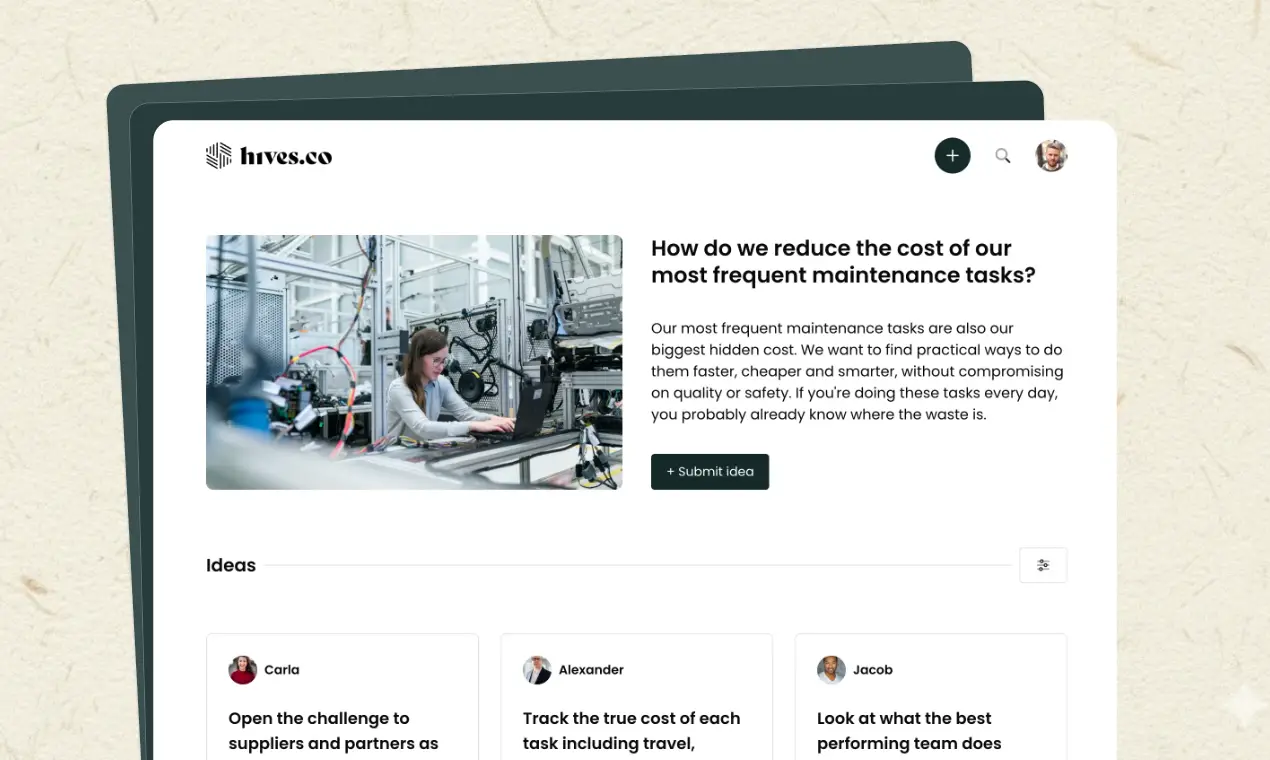
Manufacturing environments benefit from running campaigns focused on specific production challenges: "How can we reduce downtime on Line 3?" or "What safety hazards have you observed?" These campaigns generate high-quality, directly actionable ideas from people who understand the work intimately.

Retail and hospitality

Retail employees interact directly with customers every day. They see what frustrates shoppers, what products are misplaced, what processes waste time, and what competitors are doing differently. This frontline intelligence is enormously valuable, but only if it reaches decision-makers.

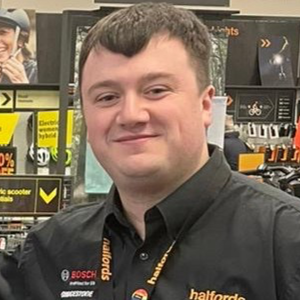
Halfords, the UK retailer, demonstrated what is possible: 515 ideas from over 1,000 employees across 400+ stores in six months, generating £759,000 in business value. The key was making it easy for store employees to contribute from their phones and running focused campaigns around specific business challenges rather than generic suggestion requests.

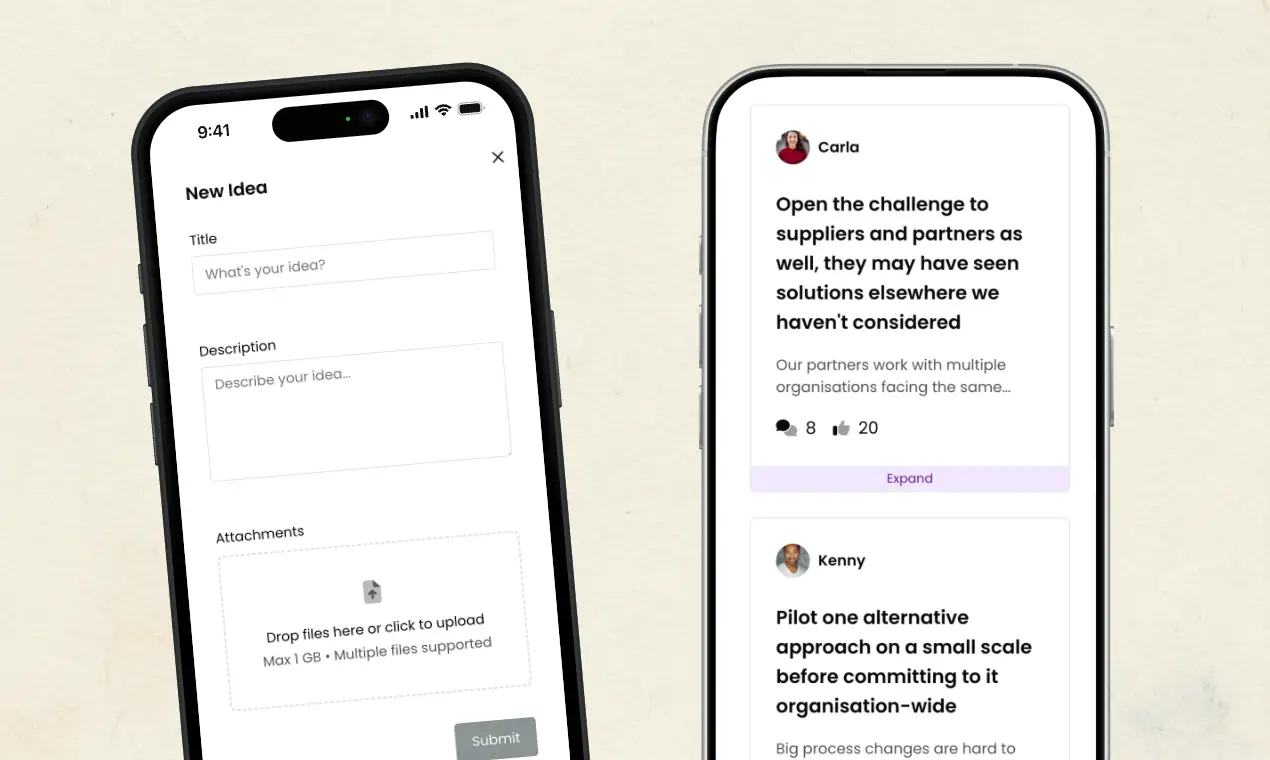
In retail, mobile-first access is not optional. Employees work cash tills, stock shelves, and serve customers. They do not sit at desks. A platform that requires corporate email and VPN access eliminates your most valuable source of ideas. QR codes posted at staff areas linking to idea submission work well.

Hospitality organisations (hotels, restaurants, event venues) face similar challenges. Front-of-house staff see every customer interaction. Back-of-house staff see operational efficiency opportunities. Running campaigns around specific guest experience challenges ("How can we improve check-in speed?") or operational issues ("What slows down the kitchen?") generates valuable ideas from people who see these challenges daily.

Energy and construction

These sectors face unique challenges: distributed workforces across project sites, strict safety requirements, and complex regulatory environments. Innovation ideas often relate to safety improvements, process efficiency on construction sites, sustainability measures, and equipment optimisation.

VINCI Energies, with 97,000 employees across 50+ countries, uses Hives.co to capture improvement ideas across nearly 1,900 business units. The decentralised structure means each unit can run its own campaigns in its local language, while group-level analytics identify patterns and synergies across the organisation.

For construction, safety is paramount. Campaigns focused on "What workplace hazards have you identified?" or "How can we make this site safer?" generate hundreds of ideas from people working in potentially dangerous environments. Many of these ideas are quick fixes with significant impact.

For energy companies, asset maintenance is critical. Ideas about predictive maintenance, equipment efficiency, or operational safety feed directly into business continuity and profitability.

Public sector

Public sector organisations face the constant tension of rising citizen expectations against constrained budgets. Employee ideas here often focus on service delivery improvements, administrative efficiency, and citizen experience.

Linköping Municipality in Sweden collected nearly 200 ideas in three months and cut idea management admin time by 66% using Hives.co. The approach was deliberate: idea collection was organised around specific municipal priorities, not left as an open-ended suggestion box.

Public sector employees often care deeply about delivering good service within budget constraints. A structured idea management programme taps into this intrinsic motivation. Campaigns can focus on: cost reduction without service impact, citizen experience improvement, or regulatory compliance efficiency.

The evaluation process in public sector needs to account for regulatory requirements and budget cycles, but the principles remain the same: transparent evaluation, clear feedback, and visible implementation.

Professional services and consulting

In professional services, innovation ideas often relate to client delivery, internal efficiency, and knowledge management. These organisations have highly educated workforces with strong opinions about how work should happen. Participative innovation channels this into structured improvement.

Campaigns might focus on: improving client experience, streamlining internal processes, reducing administrative burden on consultants, or knowledge sharing across teams. The challenge is valuing ideas that improve firm efficiency even if they do not directly increase billable hours.

Financial services

Banks and financial institutions have strict regulatory requirements but also face intense competition and changing customer expectations. Ideas here often balance compliance with innovation: new customer experience features, operational efficiency, security improvements, and cost reduction.

The evaluation process must account for regulatory requirements. Some ideas require compliance review. But a well-structured campaign focused on "How can we improve customer experience within our current regulatory framework?" generates practical, implementable ideas.

Healthcare

Healthcare organisations have highly diverse workforces (doctors, nurses, administrative staff, support services) with varying levels of engagement with digital systems. Patient safety is paramount, so ideas related to safety get priority evaluation.

Campaigns focused on safety improvements generate high-quality ideas from people who see patient risks daily. Campaigns focused on operational efficiency (reducing appointment wait times, streamlining paperwork) generate ideas from administrative staff. The platform must be accessible to all employee groups, including those not comfortable with technology.

What works across all industries

Despite the differences, successful participative innovation programmes share common elements regardless of sector:

Targeted campaigns around real business challenges. Generic requests for ideas generate noise. Specific challenges generate signal.

Mobile-first access for all employees. If your programme requires a desktop computer, you have excluded your frontline workforce.

Structured evaluation with transparent feedback. Everyone should understand how ideas are assessed and what happened to theirs.

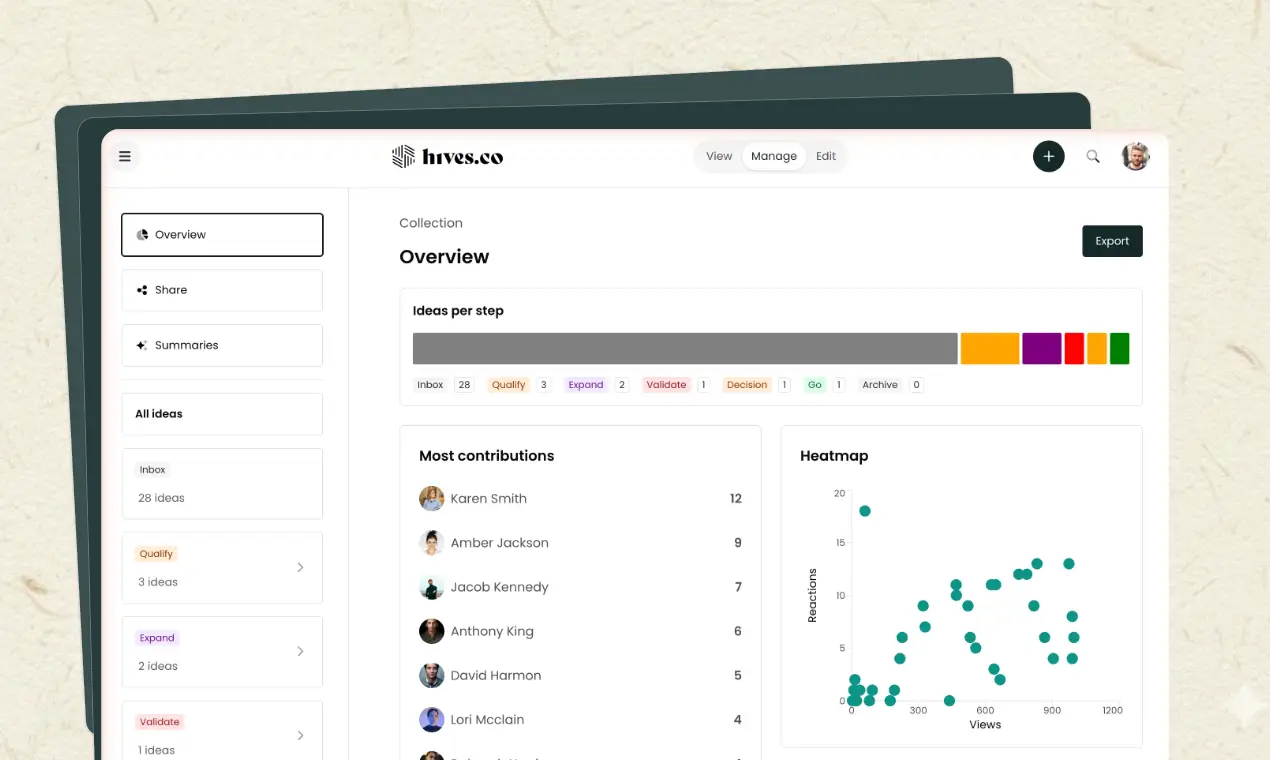
Measured outcomes. Track participation, implementation rate, and business value. This demonstrates ROI and justifies continued investment.

Hives.co is built to support these fundamentals across any industry. The platform adapts to your sector's specific needs (compliance requirements, regulatory constraints, distributed workforces) while providing the core infrastructure that makes participative innovation work at scale.

Frequently asked questions

Does participative innovation work in heavily regulated industries?

Yes. Ideas about safety, efficiency, or customer experience can be implemented within regulatory bounds. The key is defining evaluation criteria that account for compliance upfront. Some ideas need regulatory review, but this does not prevent the programme from working. It just means those ideas take longer to evaluate.

What if our industry has very different work environments across locations?

A good platform handles this. Different locations can run campaigns relevant to their context while contributing to organisation-wide analytics. VINCI Energies demonstrates this: campaigns run locally in 50+ countries and multiple languages, but central teams can identify patterns and share best practices across the organisation.

How do you motivate participation in blue-collar vs. white-collar roles?

The motivation is the same: people want to be heard and want their input to matter. What differs is the access channel. Blue-collar workers need mobile-first, no-VPN access. White-collar workers can use any interface. The participation drivers are the same: making contribution easy, closing the feedback loop, and celebrating implemented ideas publicly.

Can a single platform work across multiple industries?

Yes, with the right flexibility. Hives.co is used by manufacturing (VINCI Energies), retail (Halfords), and public sector (Linköping Municipality). The core functionality is the same. What differs is campaign design (industry-specific challenges), evaluation criteria (industry-specific requirements), and metrics (industry-specific KPIs).

Whether you operate in manufacturing, retail, energy, public sector, or professional services, the fundamentals of participative innovation are the same: structured collection, transparent evaluation, fast feedback, and visible results. Book a demo to see how organisations in your industry use Hives.co to turn employee ideas into measurable results.